


CPCReS Research and Community Service Roadmap
The formulation of the CPCReS Research Center Roadmap is derived from the conceptual framework outlined in the Vision, Mission, Objectives, and Strategies (VMTS) as well as from the results of the self-evaluation process. In addition, the CPCReS Research Center Roadmap for the 2024–2027 period also refers to the University’s Research and Community Service Roadmap, which has been compiled into the Research Master Plan (RIPP) and the Community Service Master Plan (RIPM) of UNPAR’s Institute for Research and Community Service (LPPM UNPAR).
Research and Community Service Focus Areas of UNPAR (2024–2027)
In UNPAR’s RIPP 2024–2027, the research priority areas consist of three main topics:
- Sustainable Food System
- Sustainable Technology and Innovation
- Well-Being
Meanwhile, in the RIPM UNPAR 2024–2027, there is one main topic for community service, namely Well-Being.
The Sustainable Food System topic in the RIPP includes four subtopics:
- Food Production
- Food Processing
- Food Value Chains
- Nutrition and Health
The Sustainable Technology and Innovation topic includes four subtopics:
- Eco-Friendly Construction Materials
- Eco-Friendly Technology
- Geological Disasters
- Urban Infrastructure and Built Environment
The Well-Being topic includes six subtopics, covering:
- Economic Conditions of Society
- Quality of Life Factors
- Connectivity and Engagement
- Natural Capital
- Human, Physical, and Financial Capital
- Social and Institutional Capital
The Well-Being topic in the RIPM contains the same six subtopics as those listed in the RIPP.
Formulation of the CPCReS Roadmap
Based on the RIPP and RIPM of LPPM UNPAR, the CPCReS management has developed its own Research Center Roadmap. The Roadmap outlines a general theme to be achieved during the 2025–2027 period. This general theme will be realized through research and community service activities.
The planned research and community service activities consist of three research priority topics adopted from UNPAR’s RIPP and one community service priority topic adopted from the same framework. CPCReS then defines specific subtopics for each of these priority areas to align with the distinctive disciplines and methodologies of the UPPS (Faculty of Philosophy).
These subtopics serve as guidelines for lecturers and/or students to conduct thematic research and community service activities over the next three years. Each year, the specific research and community service themes are predetermined so that these activities can be carried out synergistically and collaboratively in various forms.
General Theme of the CPCReS Roadmap
Based on the elaboration of topics and subtopics in the RIPP and RIPM of LPPM UNPAR, CPCReS formulates the following general theme for its research and community service activities:
Interdisciplinary studies on local and universal civilizations that are just and sustainable in the areas of food, technology, and holistic well-being (physical and spiritual).
Priority Fields and Topics
This general theme is then elaborated into priority fields and topics, which continue to refer to the RIPP and RIPM of LPPM UNPAR. The priority topics are as follows:
- Sustainable Food System
- Sustainable Technology and Innovation
- Holistic Well-Being (Physical and Spiritual Well-Being)
These priority topics are aligned with the distinct academic disciplines within the UPPS, which consist of three areas of study: Philosophy, Theology, and Integrated Arts.
Subtopics, Issues, and Annual Targets
The Research Center then formulates subtopics for each priority topic, identifies the problems to be addressed, and proposes corresponding research and community service themes. These proposed themes are then presented to the academic community of the UPPS—namely lecturers and students—for implementation.
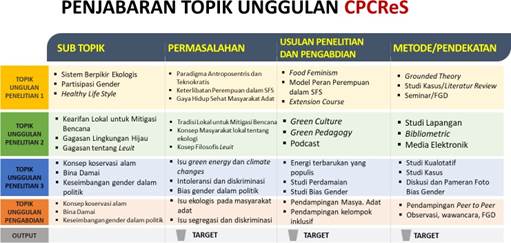
Gambar a. Penjabaran Topik Unggulan CPCReS
Finally, the outputs derived from the elaboration of priority topics into subtopics, issues, proposed research and community service activities, and methodological approaches are compiled into annual targets, structured for each year from 2025 to 2027.
The organizational structure of CPCReS for 2025-2027:
Leadership:
- Chair: Dr. Stephanus Djunatan
- Secretary: Dr. Mochamad Ziaul Haq
- Treasurers: Ester and Manuella Princessa Harefa
Extension Course Personnel:
- Philosophy: Dr. Yohanes Slamet Purwadi
- Culture and Humanities: Wilfridus Demetrius Siga
- Theology: Dr. Thomas Kristiatmo
- Art: Yacobus Ari Respati
Research Groups:
- Chinese Diaspora Studies: Ester and Ardian Changianto
- Philosophy Studies: Dr. Sylester Kanisius
- Theology Studies: C. Harimanto Suryanugraha
- Humanities Studies: Dr. Bernardus Ario Tejo Sugiarto
- Media Studies: Gorivana Ageza
- Sunda Studies/Nitiganda: Dr. Alfonsus Sutarno
Journal Managers:
- Melintas Journal: Dr. Hadrianus Tedjoworo
- FOCUS Journal: Dr. R.F. Bhanu Viktorahadi
- Sapientia Humana Journal: Yusuf Siswantara
- Integrated Arts Journal: Yacobus Ari Respati
- Integritas Terbuka Journal: Dr. Mochamad Ziaul Haq
Student Activity Mentors:
- Cultural Philosophy: Dr. Mochamad Ziaul Haq
- Theology: Yoseph Kristinus Guntur
- Humanity Studies: Yustinus Ardhitya